Bedding · Materials Guide
Silk Comforters for Warm Nights: Understanding Fill, Shell, and Weight
A silk comforter can feel almost improbably light: a quiet layer of warmth, a smooth surface, and little of the bulky weight associated with colder-weather bedding. Its character, however, depends on more than the word silk on a label. Fill construction, shell fabric, and seasonal weight all shape how it performs—and how carefully it must be treated.
The appeal of a lighter layer
Warm nights invite a particular sort of bedding calculation. A sleeper wants enough cover to feel settled, but not so much that the bed becomes a small climate of its own. Heavy insulation can feel reassuring in January and oppressive in July; a thin sheet can be insufficient even when the room is mild. A silk comforter occupies a useful middle ground, offering a layer that may provide gentle warmth without the substantial loft of many down- or wool-filled alternatives.
Silk is prized for its fine, smooth filament and its ability to be formed into a light, flexible filling. In bedding, the result is often a comforter that lies close to the body and drapes rather than standing high above it. That impression is not simply a matter of luxury language. The amount and arrangement of the fill, the cloth enclosing it, and the way the layers are stitched or secured all affect what a sleeper actually experiences.
It is worth approaching silk bedding as a construction, not a promise. “Silk” identifies a material, but it does not by itself tell you how warm a comforter will be, how it will feel against the skin, whether it can be washed at home, or how it will suit a particular room. Those answers live in the specifications and care label—and in the fit between the bedding and the person using it.
What silk fill does
The fill is the insulating layer inside the comforter. Its purpose is to hold warmth while allowing the bedding to remain pliable and comfortable. Silk fibers can be arranged in different ways, and those differences matter. Some silk comforters use a layered, sheet-like filling; others may describe the silk by grade, strand, or other manufacturing terms. Product descriptions do not always use the same vocabulary, so the most helpful questions are practical: Is the filling continuous or loose? How is it distributed? Is it secured throughout the comforter? What is the stated fill weight?
A continuous silk filling can feel smooth and cohesive, with less of the shifting sensation associated with some loose fills. A layered structure may also contribute to the fluid drape that people often notice in silk bedding. But construction details vary by maker, and a label’s terminology should not be treated as a universal standard. When a description gives little information beyond “silk fill,” it is reasonable to consult the manufacturer’s care and construction notes rather than infer a particular design.
Fill weight is a useful clue, though it is not a complete warmth rating. It tells you how much filling is present, but not, on its own, how the fibers are arranged, how large the comforter is, or how heat moves through the shell and the layers beneath it. Two comforters with similar fill weights may not feel identical. Dimensions, construction, room temperature, sleepwear, and the sleeper’s own sensitivity to warmth all influence the result.
Silk’s fine structure can make it possible to create a warm layer without a conspicuously thick profile. That is one reason it is often considered for transitional seasons and warmer bedrooms. Still, “lightweight” does not mean “cool in every circumstance.” Bedding works as part of a system: a thick duvet cover, flannel sheets, a warm mattress protector, or a poorly ventilated room can change the overall experience. The comforter is one participant in the night’s temperature, not the sole director.
The shell: the fabric that meets the room
The shell is the outer fabric that encloses the filling. It affects the hand, drape, durability, and general feel of a silk comforter, as well as the way the fill is protected. Silk shells are sometimes made from charmeuse, a satin weave with a smooth face and a softer, more matte reverse. Other shells may use different silk constructions or another fabric entirely. The fiber content and the weave should be considered separately: silk describes the material, while weave describes how the threads are interlaced.
A smooth shell can feel cool when first touched, especially in a comfortable room, but that initial sensation should not be mistaken for a lasting temperature effect. The fabric’s surface, the room’s conditions, and the sleeper’s skin all shape the impression. A tightly woven shell may help contain the fill and create a neat finish; the weight and texture of the fabric can also affect how readily the comforter settles over the body.
Thread count is sometimes presented as a shortcut to quality. It is better understood as one specification among several. A higher number does not automatically mean a more comfortable or longer-lasting shell, and counting conventions can differ among textiles and manufacturers. Look for clear information about fiber content, weave, finishing, construction, and care. A well-described shell is more useful than a single impressive-sounding number.
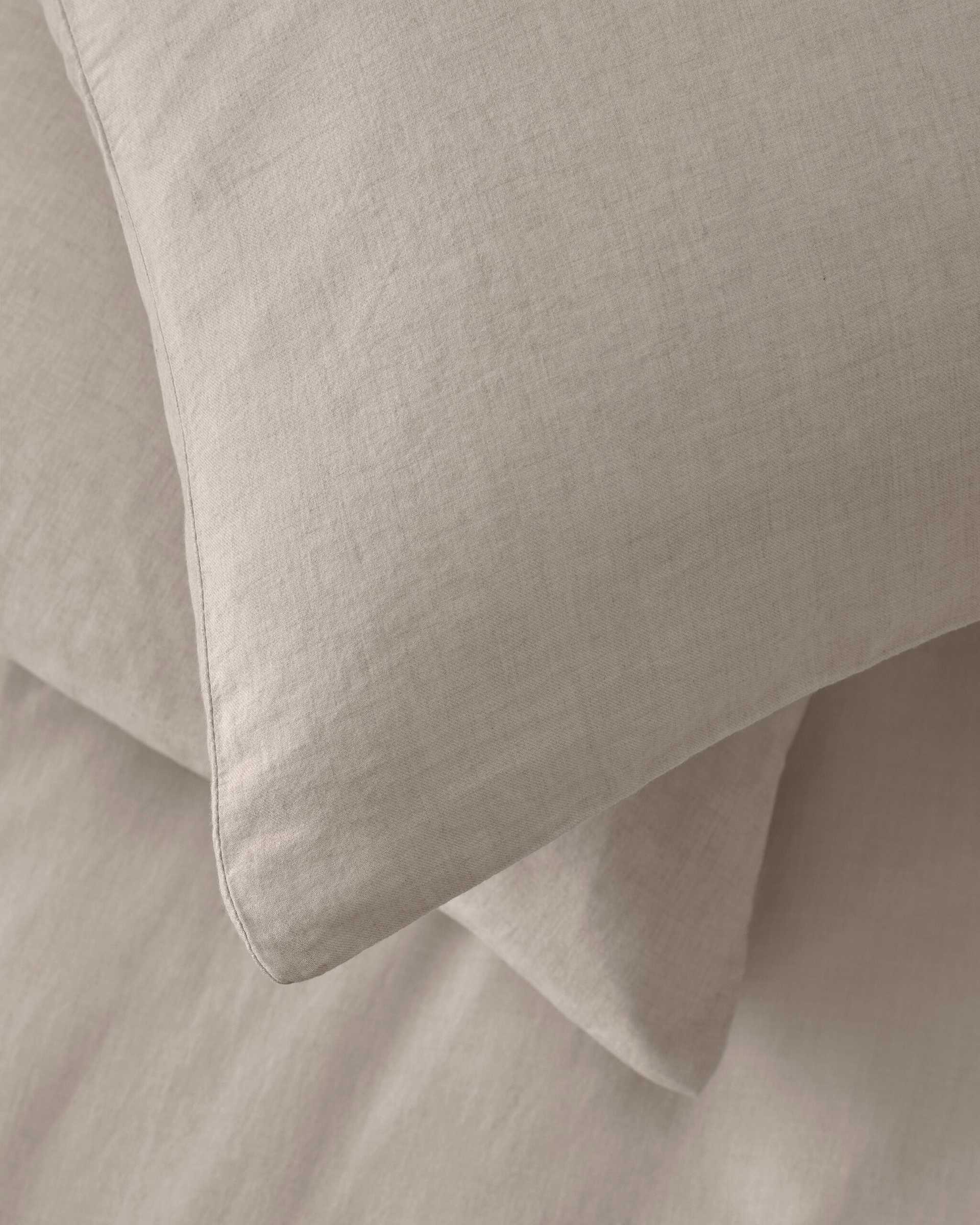
Details at the edges and corners deserve attention, too. Piping can give the perimeter a defined finish; corner loops or ties can help connect a comforter to a duvet cover, reducing bunching inside it. Stitching and quilting can secure the layers, although the method varies. These features may seem minor beside the question of fill, but they influence everyday use. A comforter that migrates inside its cover, or whose filling shifts unevenly, can become less comfortable even if its materials are excellent.
For anyone who prefers a separate cover, compatibility matters. Check whether the comforter has ties or loops, confirm that its dimensions suit the cover, and allow for the way different fabrics drape. A cover can protect the shell from ordinary soil and reduce the frequency of washing the comforter itself. It also adds another layer of texture and warmth, a point worth remembering when choosing bedding for summer.
Seasonal weight is personal
Labels such as “summer weight” and “all-season” are helpful descriptions, not precise forecasts. They suggest an intended range of use, but they cannot account for every climate, bedroom, or sleeper. Someone in a cool, air-conditioned room may find a summer-weight comforter comfortable through much of the year. Someone in a humid, uncooled room may prefer only a sheet on the warmest nights. The same item can feel generous to one person and barely there to another.
When comparing options, look for the actual fill weight and the comforter’s dimensions, then consider how it will be layered. If the product gives a warmth rating, use it as a point of reference rather than a guarantee. A light comforter over breathable cotton sheets may work differently from the same comforter inside a heavy cover and atop dense winter bedding. The bed’s combined layers create its practical warmth.
There is also the question of coverage. A comforter that is too small may leave gaps when a sleeper turns, making a light fill seem inadequate. A larger size can improve coverage, but it may add weight and create more fabric to manage. Before choosing, compare the comforter measurements with the mattress and consider whether it is intended to sit inside a duvet cover or be used on its own.
For warm nights, the aim is not maximal cooling so much as a comfortable, balanced microclimate. Silk fill may offer a supple, lighter alternative to bulkier insulation, but no fiber can guarantee that a sleeper will never feel warm. Personal metabolism, humidity, ventilation, mattress materials, and bedding layers all matter. Sensible expectations are part of a good purchase: choose for the room and the person, not for a headline adjective.
Reading a care label before the first night
Silk is a delicate natural fiber, and care instructions should be treated as part of the comforter’s design. Some silk-filled comforters are intended for professional cleaning; others may have specific spot-care directions. A product description that says “silk” is not enough to determine a safe washing method. The shell, filling construction, stitching, and finishing can all affect what the item tolerates.
Before using or cleaning a new comforter, read the sewn-in label and the manufacturer’s instructions. If they conflict with a general online tip, follow the instructions supplied for that particular item. Avoid assuming that machine washing is safe simply because the comforter looks sturdy, and do not use heat, bleach, or aggressive detergents unless the care directions explicitly allow them. When the label calls for professional care, the safest course is to use a cleaner familiar with delicate bedding and explain the materials involved.
Routine airing can help refresh bedding between cleanings. Give a comforter room to breathe in a dry, shaded, well-ventilated place, following any maker guidance about sunlight. Prolonged direct sun can affect some textiles and finishes, so airing outdoors should not be treated as a universal rule. If the comforter is damp, allow it to dry fully before storing or covering it; trapped moisture can lead to odor and may damage textiles over time.
Using a removable duvet cover is a simple form of protection. The cover takes on much of the daily contact with skin, hair, and household dust, and is generally easier to launder than a filled comforter. Choose a breathable cover whose care is manageable for your routine. Wash it regularly according to its label, and make sure it is completely dry before putting it back on the bed.
For storage, avoid compressing silk bedding for long periods in a way that crushes its structure. A clean, dry, breathable storage bag or cupboard shelf is preferable to a damp or airtight environment. Keep the comforter away from sharp objects, heavy pressure, and places where insects or moisture are likely to be a problem. Care does not need to be elaborate; it needs to be consistent and compatible with the manufacturer’s directions.
A practical checklist for comparing comforters
Product pages can make two similar-looking comforters seem interchangeable. A short checklist helps bring the decision back to materials and use rather than imagery or broad claims.
- Fill composition: Confirm whether the filling is silk and look for specific details about its form or construction.
- Fill amount: Compare the stated weight where available, while remembering that weight alone does not define warmth.
- Shell material: Check the fiber content and weave, and consider how the surface will feel against your usual cover or sheets.
- Dimensions: Match the measurements to your mattress and duvet cover, allowing for the drape and coverage you prefer.
- Construction: Look for clear information about stitching, quilting, edge finish, and any ties or corner loops.
- Care instructions: Find out whether the comforter can be spot-cleaned, professionally cleaned, or washed, and follow the label.
- Intended season: Treat seasonal descriptions as guidance, then consider your room temperature and existing layers.
- Transparency: Prefer specifications that explain materials and care plainly over vague promises that cannot be assessed.
These questions are useful whether the comforter is a first exploration of silk bedding or a replacement for a familiar down or wool layer. They also make it easier to distinguish comfort from care. A fabric may feel appealing in a showroom or on a product page, but its cleaning requirements should suit the way it will actually be used.
Silk beside other bedding fibers
Silk is not the only natural material used for light, comfortable bedding. Cotton is widely used in shells and covers, and its feel varies substantially with weave and finishing. Wool is known for insulation and moisture management, and is available in comforters with a range of weights. Down and synthetic fills can provide loft, though their warmth, maintenance, and sourcing considerations differ. No material is best in every situation; the better comparison is between a material’s particular strengths and the sleeper’s priorities.
Silk’s distinctive appeal often lies in its combination of a light profile, smoothness, and flexible drape. A person who dislikes a lofty comforter may appreciate that less substantial feel. A person who wants a bedding item that can be tossed in a domestic washing machine may find that the care requirements of a particular silk comforter are less convenient. Comfort includes the night’s sensation, but it also includes the work required to keep the item in good condition.
It is useful, too, to separate material properties from health claims. A comforter’s composition does not establish that it will prevent allergies, cure a sleep problem, or regulate temperature in the same way for everyone. Individual sensitivities vary, and statements about hypoallergenic performance should be read carefully. If a person has a known allergy or a medical concern, the relevant question is not whether a fiber is described as natural, but whether the specific product and its care are suitable for that person.
Questions people often ask
Is a silk comforter suitable for summer?
It can be, particularly when the fill is light and the room is warm but not excessively hot. Check the stated weight and construction, and consider the shell, duvet cover, sheets, and room conditions together. A summer label is a guide, not a guarantee of comfort in every climate.
Does a silk comforter need a duvet cover?
A cover is not universally required, but it can protect the comforter from routine soil and make regular laundering simpler. If the comforter includes corner loops or ties, a compatible cover can also help keep the layers aligned. Follow the maker’s use and care guidance.
Can I wash silk bedding at home?
There is no single answer for every silk comforter. The shell, fill, construction, and finishing determine the appropriate method. Check the care label before cleaning; if it specifies professional care, do not substitute a home-washing method based on general advice about silk garments.
Is a higher fill weight always warmer?
More fill can contribute to greater insulation, but it is only one factor. Dimensions, fiber arrangement, shell fabric, construction, and bedding layers also influence warmth. Compare fill weight alongside the rest of the specifications rather than treating it as a complete rating.
What should I inspect if a comforter feels uneven?
Check whether the comforter has shifted inside its cover and whether the product’s construction uses quilting, stitching, or another method to hold the layers in place. Follow the care instructions and avoid pulling or stretching the fabric. If the fill appears to have moved or the stitching has failed, consult the seller or manufacturer before attempting a repair.
A quieter kind of warmth
The attraction of silk bedding is not necessarily spectacle. It is the possibility of warmth without a great deal of weight, a surface that feels smooth, and a layer that moves with the sleeper rather than occupying the whole bed. Those qualities depend on details that can be overlooked when a product is described only as luxurious: the kind and arrangement of the fill, the shell’s weave, the comforter’s dimensions, and the rules governing its care.
For warm nights, the most useful choice is rarely the one with the grandest claim. It is the one whose construction matches the room, whose weight suits the sleeper, and whose care requirements feel realistic six months after purchase. Read the label, compare the specifications, and think about the bedding already on the bed. A comforter is a small domestic climate system, and the most comfortable version is the one that lets the night remain, quite simply, a night.